Buying a home in Easton, Massachusetts is a major investment, and a standard property walkthrough may not reveal every environmental concern. Easton’s humid summers, heavy rainfall, and cold-weather moisture can contribute to conditions that encourage mold growth in basements, bathrooms, crawl spaces, and other areas. For buyers, sellers, and real estate professionals, a professional home mold inspection can uncover potential mold and moisture concerns before they become expensive surprises.
D.R. Services provides professional mold inspection and testing designed to identify mold that may not be visible during an ordinary property inspection. The company uses professional inspection methods, air sampling devices, surface swabs, and accredited laboratory analysis to help determine whether mold is present and guide the appropriate next steps.
Why Mold Inspection Matters During an Easton Home Sale
A home can look clean and well maintained while still having hidden moisture problems.
Mold does not always grow in obvious locations. It can develop behind walls, beneath flooring, inside HVAC systems, or in areas where moisture has remained unnoticed.
That makes mold inspection particularly valuable during a real estate transaction.
A buyer may see a freshly painted basement and assume everything is fine, but paint can conceal previous water staining or moisture-related damage. Similarly, a bathroom may appear clean while poor ventilation has created conditions favorable to mold.
Easton’s Seasonal Moisture Can Create Risk
Easton experiences seasonal changes that can affect moisture levels inside homes. Humid summer conditions, heavy rain, and winter weather can contribute to moisture entering or accumulating within a property. D.R. Services specifically identifies basement moisture, flooding, roof or plumbing leaks, poor bathroom ventilation, damp crawl spaces, and storm-related water damage as potential contributors to mold growth in Easton homes.
For a real estate transaction, identifying these conditions early can provide valuable information before closing.
What Does a Home Mold Inspection Look For?
A professional inspection is about more than spotting visible mold.
The goal is to determine whether conditions exist that could support mold growth and whether hidden contamination may be present.
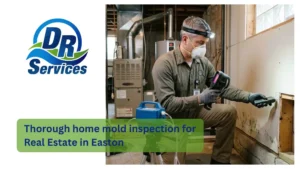
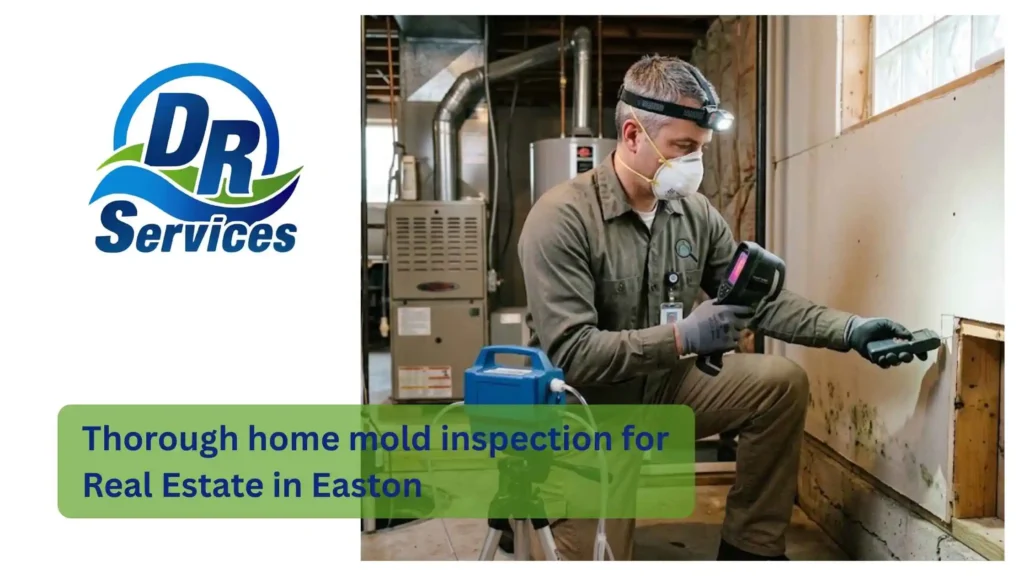
D.R. Services explains that its mold testing process begins with a detailed inspection looking for signs of mold growth, moisture damage, and other conditions that encourage mold formation.
An inspection may focus on areas such as:
- Basements
- Bathrooms
- Crawl spaces
- Areas affected by previous leaks
- Areas with visible water damage
- HVAC-related areas
- Locations with persistent moisture
- Areas where musty odors are present
Visible Mold Is Only One Clue
Dark spots, discoloration, or visible growth can obviously warrant further investigation.
But the absence of visible mold does not necessarily mean there is no mold problem.
Hidden growth can exist inside building materials or other areas that cannot be evaluated through a simple visual walkthrough.
A Real Estate Mold Inspection Scenario in Easton
Consider a buyer preparing to purchase an older Easton property.
During the initial walkthrough, the home appears to be in good condition. The kitchen has been updated, the living areas are freshly painted, and the basement looks generally clean.
However, the buyer notices a faint musty odor near one corner of the basement.
There are no obvious patches of mold.
Rather than ignoring the odor, the buyer schedules a professional home mold inspection.
The inspection identifies signs of moisture in the basement and raises concerns about conditions that could support hidden mold growth. Professional testing is then used to collect samples from relevant areas.
The results give the buyer and real estate professionals better information about the property’s condition.
Instead of making a decision based only on appearance, the buyer now has objective information that can help determine what should happen next.
This is one of the primary advantages of professional inspection: it provides information that a basic visual walkthrough may not reveal.
Why Professional Mold Inspection Is Better Than DIY Testing
Homeowners can purchase inexpensive mold test kits, but these products cannot replace a professional evaluation of the property.
A test kit may provide limited information about a particular sample, but it does not necessarily explain where moisture is coming from, whether hidden areas require investigation, or how widespread a potential problem may be.
D.R. Services takes a more comprehensive approach.
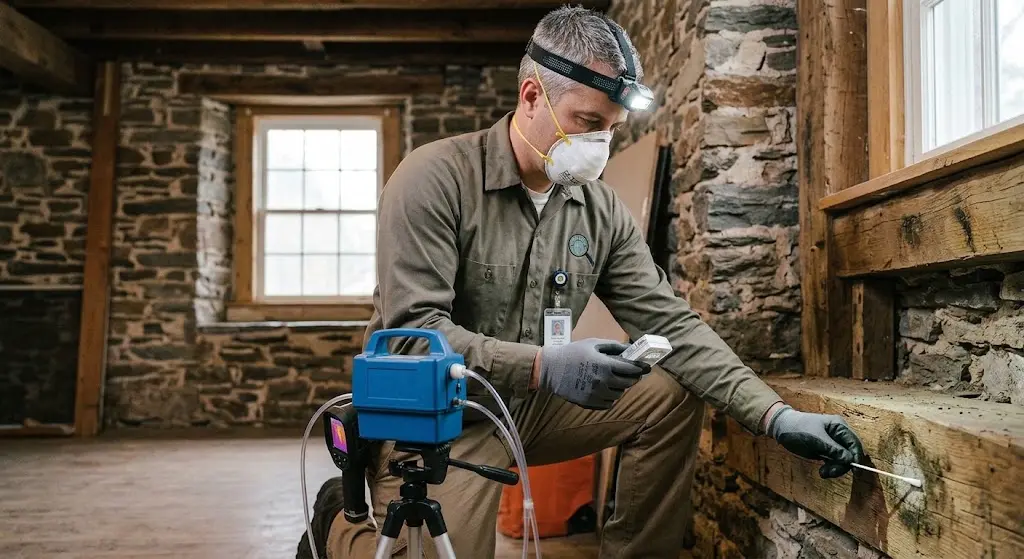
The company states that its mold testing begins with a property inspection and uses air sampling devices and surface swabs to detect mold spores in air and on surfaces. Samples are then sent to an accredited laboratory for analysis.
Professional Equipment Provides More Information
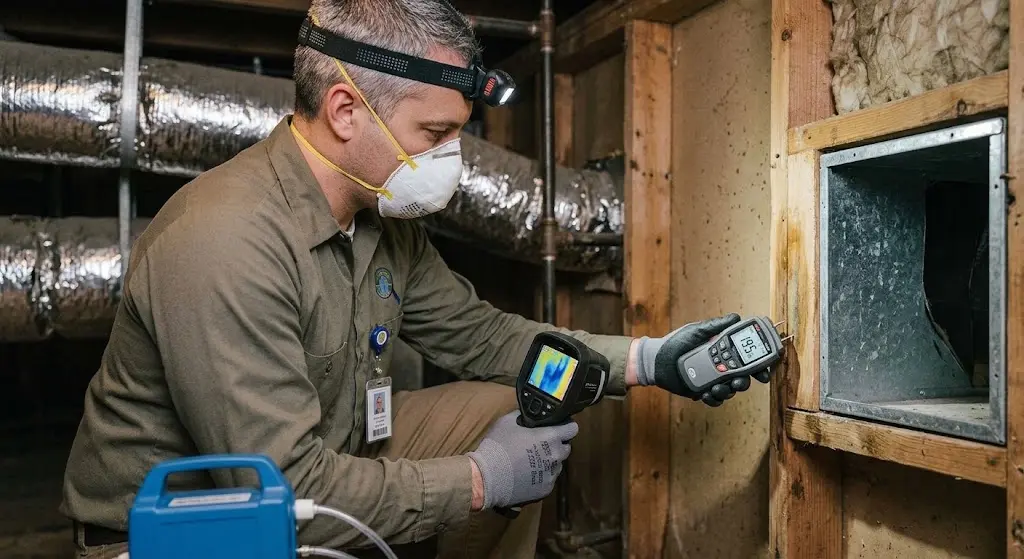
Professional inspectors can evaluate the property for environmental conditions rather than relying solely on what is visible.
Sampling Requires Proper Locations
Where a sample is collected matters.
A professional can identify areas that warrant investigation based on moisture, odors, visible staining, property history, or other observations.
Laboratory Analysis Adds Context
D.R. Services sends collected samples to an accredited laboratory to identify the mold species present and provide information about the concentration found.
This information can help guide decisions about remediation or mitigation.
When Should Buyers Request a Mold Inspection?
There is no single situation in which every home buyer must have mold testing.
However, a professional inspection can be particularly useful when a property has warning signs or a history that raises concerns.
After Water Damage
Previous flooding or leaks can create lingering moisture problems.
Even after visible water has disappeared, moisture may remain within building materials.
When There Is a Musty Odor
A persistent musty smell can justify further investigation, especially when its source is unclear.
In Older or Previously Renovated Homes
Renovations can sometimes conceal previous water damage or moisture-related problems.
A professional evaluation can provide additional information before the property changes ownership.
When the Property Has High Humidity
Poor ventilation and persistent humidity can create conditions favorable to mold growth.
D.R. Services specifically recommends mold testing for properties affected by water damage, poor ventilation, or high humidity.
Moisture Is Often the Real Problem
Finding mold is important, but understanding why it developed is equally important.
Mold needs moisture to grow.
If the underlying moisture problem remains unresolved, removing visible mold may only provide a temporary solution.
D.R. Services’ mold mitigation approach focuses on identifying moisture sources such as leaks, poor ventilation, and excessive humidity. The company recommends addressing these underlying conditions as part of long-term mold prevention.
Common Moisture Sources
Potential sources include:
- Plumbing leaks
- Roof leaks
- Basement moisture
- Poor bathroom ventilation
- Damp crawl spaces
- Water intrusion following storms
For a buyer, identifying the source can be just as important as identifying the mold itself.
How Mold Testing Supports Real Estate Decisions
A home purchase involves uncertainty.
Buyers are already evaluating the roof, foundation, plumbing, electrical system, HVAC equipment, and other major components.
Environmental concerns can add another layer of uncertainty.
A professional mold inspection provides additional information that can help buyers make informed decisions.
If testing identifies no significant mold concerns, the buyer may have greater confidence moving forward.
If testing identifies a problem, the buyer can investigate the issue before completing the transaction.
That could mean discussing remediation, addressing the moisture source, requesting additional evaluation, or reconsidering the transaction depending on the circumstances.
The key benefit is information.
What Happens During Professional Mold Testing?
The exact process depends on the property and circumstances, but D.R. Services describes a structured approach.
Step 1: Property Inspection
Professionals inspect the property for signs of mold, moisture damage, and conditions favorable to mold growth.
Step 2: Sample Collection
Air sampling devices and surface swabs can be used to collect samples from appropriate areas.
Step 3: Laboratory Analysis
Samples are sent to an accredited laboratory for analysis.
Step 4: Results and Next Steps
The findings help determine whether additional remediation or mitigation may be appropriate.
This process provides significantly more context than simply looking for visible spots on walls.
Why Hidden Mold Deserves Attention
Hidden mold can remain unnoticed because it may develop in areas that homeowners rarely access.
D.R. Services notes that mold can grow behind walls, under floors, or in HVAC systems.
These locations are important because simply cleaning visible surfaces does not necessarily address contamination elsewhere.
For real estate, this matters because the buyer is purchasing the entire property—not just the areas that were visible during the showing.
HVAC Concerns
If mold is suspected around HVAC components or air circulation areas, professional evaluation can help determine whether additional testing is appropriate.
Wall and Flooring Areas
Water that enters building materials can create hidden moisture conditions.
An inspection can help determine whether further investigation is warranted.
Mold Inspection Can Protect More Than the Property
Mold concerns are not only about the appearance of a home.
Mold can affect indoor air quality, and exposure may contribute to health problems for some individuals. D.R. Services notes that certain mold exposures can be associated with allergic reactions, respiratory problems, and other health concerns.
This does not mean that every mold finding creates a health emergency.
Instead, it reinforces why suspected mold should be evaluated properly rather than ignored.
For families moving into a new home, understanding the property’s environmental condition can provide valuable peace of mind.
What Sellers Should Know About Mold Inspections
Mold inspections are not only beneficial for buyers.
Sellers can also benefit from identifying potential issues before listing a property.
Discovering a moisture or mold problem early gives the seller time to understand the situation and determine what professional work may be necessary.
Addressing problems before they become surprises during the transaction can make the sales process more predictable.
Pre-Listing Inspection
A seller may choose to have the property evaluated before listing if there has been previous water damage, recurring moisture, or a known mold concern.
Documentation
Professional testing can provide useful documentation about the property’s condition and any identified concerns.
D.R. Services provides testing designed to help property owners make informed decisions about mold-related issues.
Why Real Estate Professionals Benefit From Professional Inspection
Real estate agents frequently help buyers and sellers navigate complicated property concerns.
When mold is suspected, having a professional environmental service involved can provide more reliable information than speculation based on appearance alone.
A professional inspection can help clarify:
- Whether testing is appropriate
- Where potential mold concerns exist
- Whether moisture is present
- Whether samples should be collected
- What the laboratory results indicate
- Whether further remediation or mitigation should be considered
This makes the process more informed for everyone involved.
Preventing Future Mold Problems After a Purchase
An inspection is valuable, but prevention matters after closing as well.
D.R. Services recommends addressing moisture sources, maintaining proper ventilation, using dehumidifiers where appropriate, repairing roof or plumbing leaks, and monitoring indoor humidity to reduce conditions that encourage mold growth.
Professional mitigation can also address moisture conditions through solutions such as improved airflow, dehumidification, vapor barriers, and moisture-resistant treatments where appropriate.
The objective is simple: do not allow a moisture problem to become a recurring mold problem.
Frequently Asked Questions
What is a home mold inspection?
A home mold inspection evaluates a property for visible and potential hidden mold, moisture damage, and conditions that could support mold growth.
Is mold testing important when buying a home?
It can be particularly useful when a property has a history of water damage, high humidity, poor ventilation, musty odors, or other warning signs.
Can mold exist without being visible?
Yes. D.R. Services notes that mold can grow behind walls, under floors, and in HVAC systems where it may not be immediately noticeable.
Does mold inspection include laboratory testing?
When sampling is performed, D.R. Services states that samples are sent to an accredited laboratory for analysis.
Should sellers get a mold inspection?
A pre-listing inspection can be useful when a property has a history of moisture, leaks, flooding, or suspected mold. Identifying concerns early can help sellers understand what needs attention before a transaction.
Can an inspection prevent mold from returning?
Inspection itself does not remove mold. However, identifying moisture sources can help professionals develop an appropriate remediation or mitigation strategy. D.R. Services emphasizes correcting underlying moisture conditions to reduce the risk of future mold growth.
Protect Your Easton Real Estate Investment
A home can look perfect during a showing and still contain hidden moisture or mold concerns. For buyers and sellers in Easton, a professional home mold inspection provides valuable information about conditions that may otherwise remain unnoticed.
D.R. Services offers mold inspection and testing that combines property assessment, professional sampling methods, and accredited laboratory analysis. Its team focuses on identifying mold, understanding moisture-related conditions, and providing information that can guide appropriate remediation or prevention.
If you’re buying, selling, or evaluating a property in Easton and have concerns about hidden mold or moisture, contact D.R. Services at (508) 230-7847 or request a free consultation to schedule a professional home mold inspection. The company provides 24-hour service for Easton and surrounding communities.